Published: January 2026
For data on adult carers, please see the unpaid adult carers page.
The health outcomes of a young carer often differ from their peers as they put the needs of the person they care for before their own. Being a young carer can have both positive and negative effects on a young persons life. Having the correct support in place is essential, however many young carers don’t see themselves as carers and miss out on getting the help they deserve.
Work within the Wakefield District to identify and support young carers is already ongoing, through the Young Carers Strategy Partnership. Nationally, recent campaigns by organisations like Carers Trust and Carers UK have increased awareness of young carers and the unique pressures they face. According to Google Trends, the number of searches for the phrase “young carer” has more than doubled between 2021 (1,345 searches) and 2025 (3,023 searches) nationally.
Headlines
- The percentage of children providing unpaid care in Wakefield varies greatly between different data sources:
- The School Census 2024/25 reports 0.4% of pupils are young carers.
- The Census 2021 reports 1.2% of children aged 5-17 provide unpaid care.
- The Wakefield Children & Young People Health Survey 2024 found 13% of participants look after or help someone in the family.
- According to the Census 2021:
- There are 1,992 young people (aged 5-24) who provide unpaid care in the Wakefield District.
- Wakefield has a significantly higher percentage of young adult carers (aged 18-24) compared to the England average.
- Young carers in Wakefield (aged 5-24) are more likely to provide a greater number of hours of unpaid care per week, compared to the England average.
- Young females (aged 5-24) are more likely to provide unpaid care than males.
- The number of known young carers within schools and GP surgeries is extremely low and is likely to be a significant under-reporting.
- Being a young carer can be an isolating experience, and inequalities can be found in all aspects of their life, including school-life, worries and concerns, mental wellbeing, financial stability, diet and behaviours.
What is a young (adult) carer?
A young carer / young adult carer is someone who provides ongoing physical, emotional, or practical support to a family member or friend who is living with an illness, a disability, mental health issue, learning disability, or addiction. They might also help to look after a sibling or family member because their parent or guardian is unable to do so.
- Young Carers (YC) – aged 0-17
- Young Adult Carers (YAC) – aged 18-25.
According to Carers Wakefield, the young carers that they have contact with through the My Time grant funding, care for family members with a range of conditions including autism, mental health disorders and physical disabilities.
Am I a young carer? Take the quiz – Sidekick by Action for Children
How does Wakefield District compare nationally?
According to the Census 2021:
- Wakefield has a significantly higher percentage of young adult carers (aged 18-24) compared to the England average, but a significantly lower percentage of young carers (aged 5-17).
- Young carers (aged 5-24) in Wakefield are more likely to provide a greater number of hours of unpaid care per week, compared to England averages.
According to the National School Census 2024/25:
- The percentage of known carers within schools is extremely low and is likely to be a significant under-reporting. Carers Trust have resources available for schools to improve their ability to identify and support young carers.
- Wakefield has fewer known young carers in school (0.4%), compared to the England average (0.8%).
- The percentage of known young carers in schools increases with age.
The interactive dashboard below can be used to explore the Census and School Census data for Wakefield compared to England averages. Click on the buttons at the top to navigate between the different sources and age groups.
What are the differences within Wakefield District?
Wakefield Children & Young People Health Survey 2024:
As part of the Wakefield Children & Young People Health Survey 2024, pupils in years 5, 7, 9 and 12 were asked whether or not they look after or help a family member who are disabled or ill for lots of reasons, including mental health or a substance use issue. Those answering yes to this question were considered to be a young carer.
- 13% of all pupils completing the survey said they provided care to a family member. This figure is similar to the results in 2022.
- The gender split was almost 50/50 between boys and girls, with 14% of boys and 12% of girls providing care to a family member.
According to the Census 2021:
- 1,992 (2.6%) of young people aged 5-24 provide unpaid care in the Wakefield District.
- The likelihood of providing unpaid care increases with age, with 5.5% of young people aged 18-24 providing unpaid care.
- Young people aged 5-24 living in the least deprived areas locally (2.0%) are less likely to provide unpaid care compared to district average (2.6%).
- Young females aged 5-24 (2.9%) are more likely to provide unpaid care than males aged 5-24 (2.3%).
- Those living in the South East wards and neighbourhoods are most likely to provide unpaid care (Kinsley Fitzwilliam Rycroft, Hemsworth, and Knottingley).
The interactive dashboard below can be used to explore the demographics of young carers and young adult carers in Wakefield. Click on the buttons at the top to navigate between age, deprivation and sex. You can also switch the map to electoral wards.
The unique pressures of being a young (adult) carer
Being a young carer can be an isolating experience, and without sufficient support young carers can face inequalities in all aspects of their life.
😓 Worries and concerns…
In a recent project by The Young Lives Consortium, young carers stated that they worry about the person they care for whilst at school, which can affect their ability to concentrate.
“When at school, I worry about my mum at home alone. I can’t concentrate, hoping my mum is OK.”
Young carer, aged 10.“On Saturdays to Sundays, I can stay at home where I can take care of her and not stress so much for her safety and wellbeing.”
Young carer, aged 11.
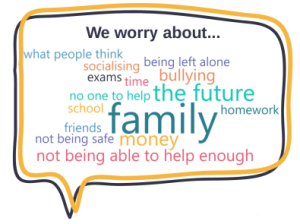
According to the Young Carers Survey 2025, which was a small survey of 53 young carers in June 2025, young carers said they worry about their family, the future and money the most. 24% of participants said they feel stressed or extremely stressed because of their worries.
According to the Wakefield Children & Young People Health Survey 2024, compared to non-carers, young carers were:
- More likely to worry about school work and exams (years 5, 7, 9).
- More likely to worry about the way they look (years, 5, 7, 9, 12).
- More likely to self-harm if worried or stressed (years 9, 12).
- Less optimistic about their health and relationships with family (year 12).
💤 Mental wellbeing and sleep…
In a recent project by The Young Lives Consortium, young carers said that their friends help when they are emotional or worried at school.
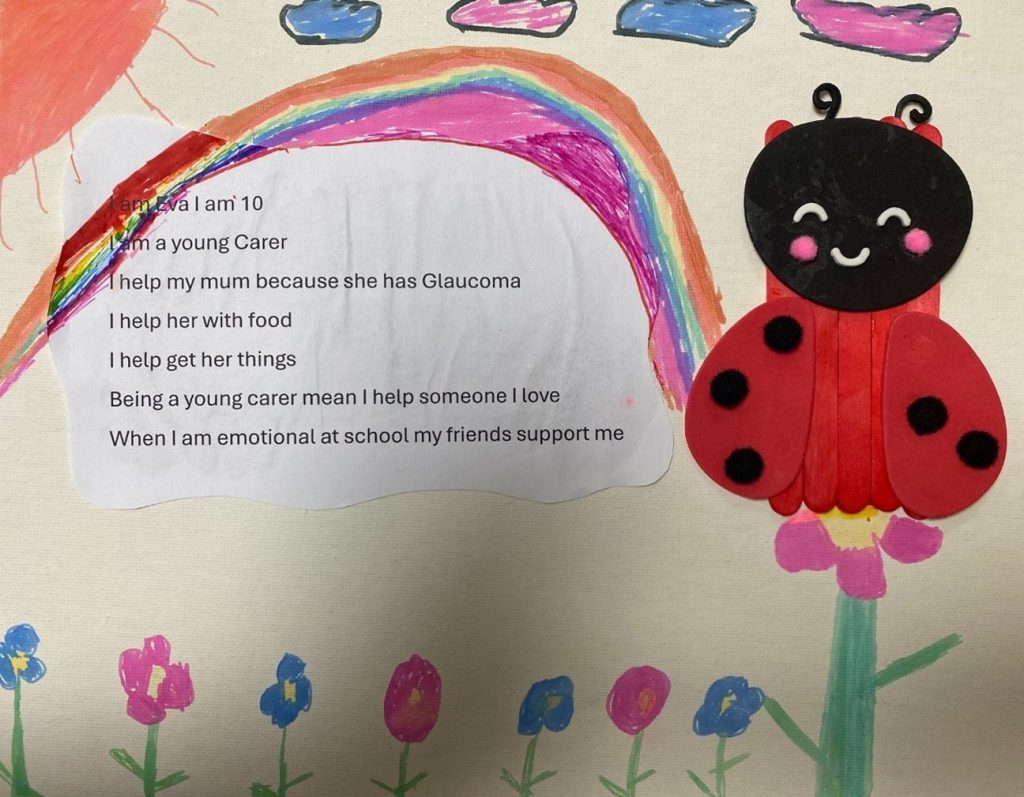
“Being a young carer means I help someone I love. When I am emotional at school my friends support me.”
Young carer, aged 10.“My best friend… helps me when I am worried about something.”
Young carer, aged 11.
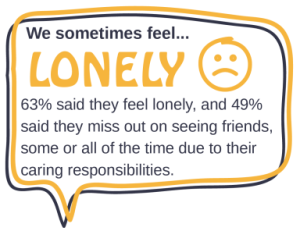
According to the Young Carers Survey 2025, which was a small survey of 53 young carers in June 2025, young carers said they sometimes feel lonely and miss out on seeing friends due to their caring responsibilities.
According to the Wakefield Children & Young People Health Survey 2024, compared to non-carers, young carers were:
- Less likely to be happy (years, 5, 7, 9, 12).
- More likely to be lonely (years, 5, 7, 9, 12).
- More likely to have poor quality sleep (year 12).
- More likely to have a possible eating disorder (year 12).
The Young Carers Strategy 2025-2027 states that young carers said they would like easier access to professional mental health support, access to activities and groups specifically for young carers to support their mental health and to provide online resources.
🍎 Diet and oral health…
According to the Wakefield Children & Young People Health Survey 2024, compared to non-carers, young carers were:
- Less likely to have eaten breakfast (years 5, 7, 9).
- More likely to consume energy drinks (years 5, 7, 9).
- Less likely to have visited a dentist in the last 6 months (years, 5, 7, 9, 12).
- Less likely to have brush their teeth at least twice a day (years, 5, 7, 9, 12).
🏫 School-life and safety…
According to the Wakefield Children & Young People Health Survey 2024, compared to non-carers, young carers were:
- More likely to say they are often scared of going to school/college because they are being bullied (years 5, 7, 9, 12).
- Less likely to feel safe at school (years, 5, 7, 9, 12).
- Less likely to feel safe in the area where they live (years, 5, 7, 9, 12).
- More likely to be sexually harassed (years 7 & 9).
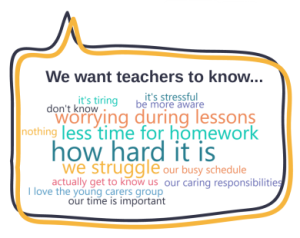
According to the Young Carers Survey 2025, which was a small survey of 53 young carers in June 2025, 56% of young carers said they struggle to do homework or keep up with schoolwork due to their caring responsibilities. When asked what school could do to help, young carers wanted their teachers to understand how hard it is to be a young carer, that they have less time to do their homework and that they sometimes worry during lessons. The Young Carers Strategy 2025-2027 states that young carers said they would like schools to provide calm spaces, extra support and special consideration. In addition, they would like teachers to complete mandatory training, and schools to deliver sessions to students to raise awareness about young carers.
According to the Heart of Yorkshire Education Group, they support 194 young carers aged 16-18 enrolled on a college course as of October 2025. The average attendance for these young carers was 84%. Although absence due to caring duties are not recorded negatively against the student, low attendance rates are likely to have an impact on achievement. The colleges have processes in place to identify and make reasonable adjustments for any students who are young carers.
Nationally, young carers have higher absence rates, reduced educational attainment, and are more likely to be NEET (Not in Education, Employment or Training) compared to their peers. According to University College London (UCL) research supported by Carers Trust, young adult carers are 38% less likely than their peers to hold a university degree (rising to 86% if they provide more than 35 hours of care per week).
📱 Free time and social media…
According to the Wakefield Children & Young People Health Survey 2024, compared to non-carers, young carers were:
- More likely to visit youth hubs once a month or more (years 5, 7, 9, 12).
- More likely to agree that they couldn’t go without social media for a day (years 7, 9).
- More likely to agree with statements about worrying about social media and feeling like they are missing out due to what they see on social media (years 7, 9).
The Young Carers Strategy 2025-2027 states that young carers highlighted the importance of supporting them to have a life outside of caring, such as access to regular breaks from caring to see friends, and spend quality time with other family members. They asked for services to provide trips and fun activities for young carers, and to deliver more young carer social groups after 5pm.
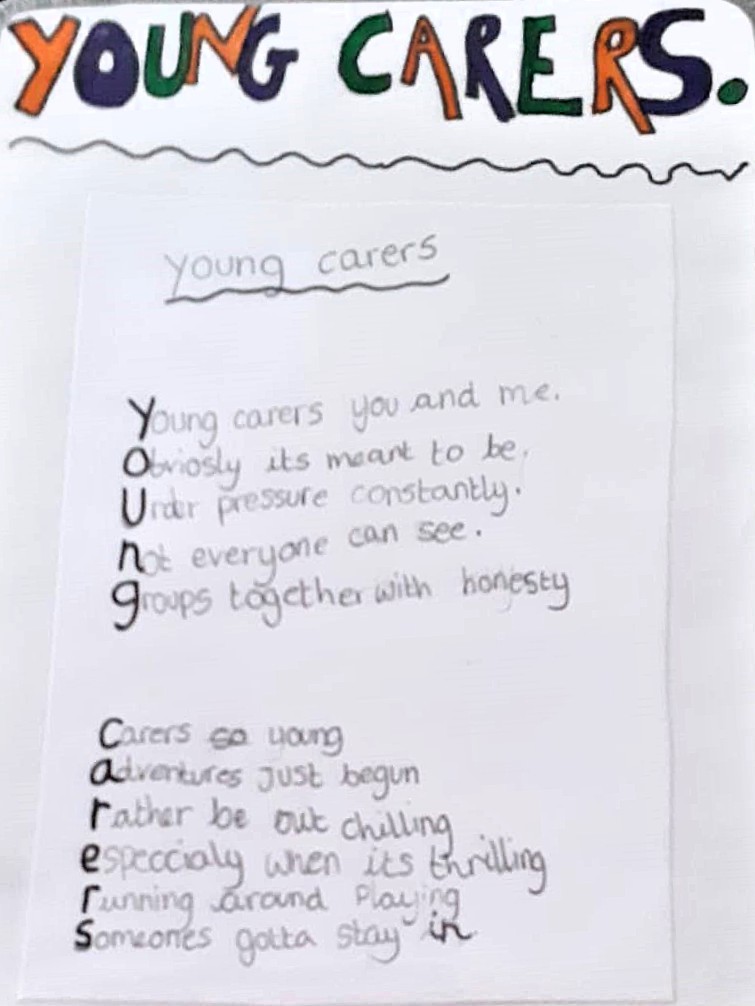
A poem written by a young carer.
🚬 Smoking and vaping…
According to the Wakefield Children & Young People Health Survey 2024, compared to non-carers, young carers were:
- More likely to have tried smoking or vaping (year 9).
- At higher risk of being exposed to someone smoking or vaping in the home (years 5, 7, 9, 12).
🎲 Gambling…
According to the Wakefield Children & Young People Health Survey 2024, compared to non-carers, young carers were:
- More likely to have taken part in gambling (years 7, 9, 12).
- Less likely to know where to get professional help for gambling (year 7).
💷 Financial stability…
According to the Wakefield Children & Young People Health Survey 2024, compared to non-carers, young carers were:
- More likely to worry about money problems (years, 5, 7, 9, 12).
- Less optimistic about having enough money (year 12).
- More likely to have experienced period poverty (years 7, 9, 12).
Many young carers contribute to or manage the family finances. A national survey by the Carers Trust found that 32% of young carers said they always or usually face additional costs because they are a carer, and 57% said that they always or usually worry about the cost of living and things becoming more expensive.
Identification of young (adult) carers in support services
There is a huge discrepancy between the number of young carers identified in different sources and services.
Young carers aged 5-17 years old:
- 661 identified in the Census (March 2021)
- 651 supported via the Young Carer Team at Wakefield Council (December 2024)
- 244 recorded in the School Census (June 2025)
Young carers and young adult carers aged 5-24 years old:
- 1,992 identified in the Census (March 2021)
- 330 recorded in primary care data (GP Core Contract, June 2025)
It is recommended that work continues in schools and GP surgeries to identify young carers so that appropriate support and adjustments can be put in place.
The Young Carer Strategy 2025-2027 states it plans to:
- Provide young carer awareness training to schools and practitioners.
- Implement the Young Carer in Schools Programme.
- Develop a Young Carer Toolkit that promotes the local young carer offer.
- Encourage GP practices to adopt a young carer-friendly approach.
Further information
- Young Carers Strategy – link coming soon
- Unpaid adult carers – Wakefield JSNA
- About Young Carers – Carers Trust
What support is available?
- Wakefield Council – Young Carers
- Young Carers – Wakefield Families Together
- Young Carers – Wakefield Carers
- Young Adult Carers – Wakefield Carers
- Being a young carer: your rights – NHS
- Young Carers in Schools
Young carer, aged 10.