
The 10 key health challenges:
 |
Children born in Wakefield District can expect to live on average 77.6 years (males) or 81.6 years (females) (2023-25). Life expectancy at birth for Wakefield has been lower than the England average for over a decade and this gap has not reduced [1]. Breastfeeding rates are significantly lower than national levels [2]. Older children are affected by increasing school absence rates. In 2024-25, almost 1 in 5 primary and secondary pupils in Wakefield missed 10% or more of their schooling during the year [3].
There are a variety of services across Wakefield supporting children and families to achieve better outcomes including a new children and young people’s plan. Despite the challenges, 89% of children in Wakefield reach a good level of development at their 2-2.5 year old check, which is significantly higher than the national average of 81% [4]. |
 |
Population estimates predict that the population in Wakefield, aged 75+, will increase by 19%, from around 35,150 to almost 41,900 in the next 10 years. The number of years a person can expect to live a healthy life, free from illness or disability has been falling [5]. Healthy life expectancy for males and females is currently around 54 years. This means that a high number of people can expect to live most of their older years in poorer health: 23.7 years for men and 27.6 years for women. As more of the population live to 80 years and beyond, they will be at higher risk of developing multiple health conditions including dementia and age-related frailty. This will increase the need for support, including help from unpaid carers such as family and friends, and place more demand on health and social care services.
Across Wakefield, older people are supported to age well [6] by maintaining independence, managing long term conditions, participating in social and cultural events and keeping active. Support is also provided to those caring for older people [7] and residential care home places are available for eligible local residents. |
 |
There is a strong link between health and wealth, with many people living in poorer parts of the district experiencing worse health outcomes. People from deprived backgrounds are more likely to experience health harms in a range of ways including increased likelihood of smoking, having excess weight, having long-term health conditions, and subsequently dying younger. Men in the most deprived areas of Wakefield District can expect to live 10.1 years fewer than those in the least deprived areas, for women the gap is 8.7 years [8]. There are groups of people in Wakefield such as unpaid carers, those with a learning disability, the LGBTQ+ community, neurodivergent people or those who were born outside the UK for whom services are not always easy to access and have poorer health outcomes.
Health needs assessments are used in Wakefield to help discover barriers people face, to focus resources on making services more accessible to everyone and to improve outcomes. |
 |
The proportion of the adult population who are living with overweight (including obesity) is currently 73% [9]. Too many children are living with excess weight, and numbers increase with age from around 25% of reception children to 38% of Year 6 children [10]. Obesity in early pregnancy is also an issue and on the rise at nearly one third of pregnant women across Wakefield [11]. Obesity is a major risk factor for Type 2 diabetes, hypertension, cardiovascular disease, and certain cancers, as well as negatively impacting on mental health and overall wellbeing [12].
Reducing obesity isn’t just about people changing their diet or exercise but influenced by many connected wider factors [13]. As a result of this complexity, greater coordinated action across the whole system is needed [14] to address conditions that contribute to the obesogenic environment. Wakefield District offers specialist weight management services as well as healthy eating and physical activity programmes for individuals and families. Key actions include planning policy, addressing the commercial determinants of health and supporting the Wakefield District Good Food Partnership. |
 |
Harm from addiction affects our physical and mental health, behaviour, relationships, wider society and the economy. Drinking alcohol is associated with risks [15] of developing diseases such as liver diseases, heart diseases, and some cancers, as well as mental health and behavioural conditions [16] such as depression, anxiety and alcohol use disorders [17]. Over a third of adults who regularly consume alcohol in Wakefield drink over the recommended 14 units of alcohol a week. Although smoking prevalence across the district has declined over the last 10 years, 11.7% of adults are smokers [18]. Wakefield District has a higher rate of deaths from drug use than the Yorkshire and Humber region and England national rates [19]. Approximately 993 individuals in Wakefield, who gamble regularly, experience gambling at a harmful level and 11% of adults in Wakefield who gamble regularly (approximately 11,818 individuals) are gambling at levels of increased risk.
Addiction is a treatable condition with help and support available [20]. In Wakefield, prevention, advice and treatment services for alcohol use provide support accessible to people experiencing alcohol harm and their families and the wider community. Smoking legislation has been updated with the introduction of the “smoke-free generation” and stronger rules on vaping [21]. Trends from the Wakefield School Health Survey show a higher percentage of pupils have never tried alcohol than in previous surveys and the percentage of never-smokers in year 7 and year 9 pupils increased. |
 |
Mental ill health affects many people in Wakefield. Rates of low mental wellbeing and loneliness in children increased during the pandemic and though they have since fallen, they have not returned to pre-pandemic levels. The suicide rate in Wakefield is one of the highest in the country [22]. For information on suicide prevention and support, visit: West Yorkshire Suicide Prevention.
There is a range of mental health support available across Wakefield from local wellbeing initiatives supporting individuals, to community-based talking therapies and clinical services. For information on mental health support services in Wakefield, visit: Adult mental health support – Wakefield Council. The 2024 Wakefield District Children and Young People Health Survey findings suggest an improving picture for some aspects of children and young people’s mental health compared to 2020 levels, with an increase in happiness levels and a decrease in loneliness. |
 |
Just over 2 in 5 residents (43.5%) have one or more long term conditions [23]. High prevalence of risk factors such as smoking, obesity and alcohol consumption means that Wakefield has higher rates than the national average of many long term conditions including cardiovascular disease [24] and respiratory conditions [25]. GP recorded hypertension prevalence is 17.3%, compared to 15.2% nationally (2024/25). Estimates suggest true prevalence could be much higher [26]. The 3-year mortality rate from cardiovascular disease for Wakefield has been worse than national levels [27] for over a decade. COPD prevalence in Wakefield is 2.7% compared to 1.9% in England (2024/25) [28].
Wakefield invests in a range of preventions including strategic approaches to tobacco control, support for environments to enable physical activity and licensing to reduce access to health-harming products. Prevention, identification and treatment of long-term conditions through NHS Health Checks, Community Blood Pressure Champions and other assessment approaches are helping people reduce their risk and access appropriate services earlier. |
 |
Cancer continues to affect people living in Wakefield at a higher rate than the national average. Although cervical and bowel cancer screening coverage in Wakefield remain above the national average, breast cancer screening coverage is below, and cervical screening rates are decreasing [29]. The overall rate of deaths due to cancer is higher in Wakefield than the England level, with similarly higher mortality rates than national figures for lung, bladder, liver and stomach cancer [30]. Under-75 mortality rates from cancers considered preventable is also significantly worse in Wakefield [31]. The most deprived areas of the district have higher cancer mortality rates than the least deprived areas.
Extensive work is being carried out to reduce risk factors such as smoking, improve screening, raise awareness and reach vulnerable groups. In Wakefield, a higher percentage of people who are eligible for screening are screened for bowel and cervical cancer compared to national levels [29]. |
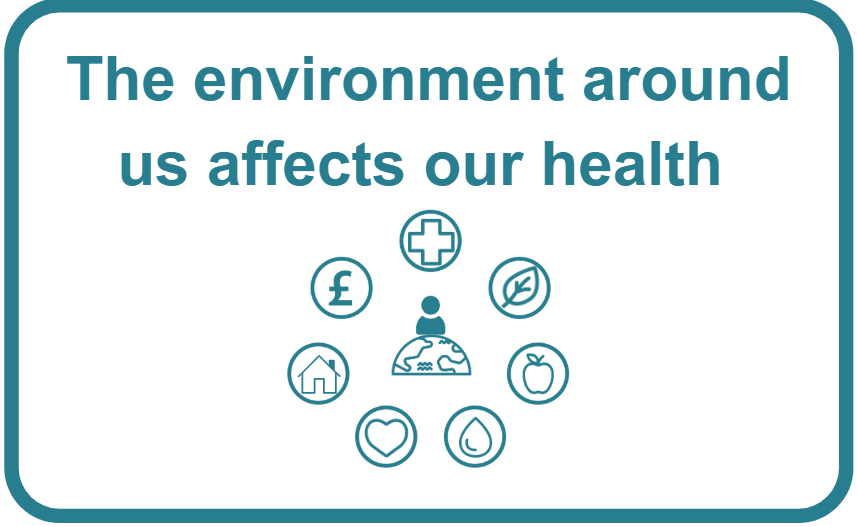 |
The environment around us and wider factors [32], [33] such as housing, climate change, the cost-of-living crisis and where we work, all contribute positively or negatively to our health. Like bricks form strong buildings, these wider factors are the blocks that combine together to support our wellbeing. If a block, such as good housing, is missing, it could have a harmful impact on our health.
14.9% of households in Wakefield live in privately rented housing (2021). Almost one in three privately rented homes across the Yorkshire and the Humber region were classified as ‘non-decent’ in 2023. Our wider environment including advertisements for fast food outlets [34] and gambling [35] influences the way people think and choices they make which in turn may affect their health and wellbeing. Recent cost-of-living increases has made it harder for low-income households to afford nutritious food and other essentials. The Wakefield Healthy Housing Pathway is a scheme that provides support for people experiencing housing issues such as fuel poverty or high energy bills. JSNA topics on ‘Work and Health’ and ‘Access to Green Space’ will be published later this year. |
 |
The health of our communities is at risk from future pandemics, growing resistance to some infections and harmful impacts of climate change. We must maintain high quality infection prevention and control measures in a setting of increased demand and service pressures.
More severe and frequent adverse weather like heatwaves, cold snaps and pollution events impact our air quality and affect the spread and patterns of disease such as populations of certain types of mosquitoes. Such events are also likely to cause food security risks and longer-term changes to habitable land causing more people to move. The rising number of cases of illnesses like measles and whooping cough continues to be a concern as they can cause serious illness, and in some cases death. Illnesses such as these can be prevented with vaccines however we are seeing low or declining immunisation rates for some age groups. Coverage across Wakefield District is generally similar to or above the England level for adult vaccinations and for all childhood vaccinations [36]. A total of 1,297 new Sexually Transmitted Infections (STIs) were diagnosed in Wakefield in 2025 [37]. The district has lower STI rates than both regional and national levels. |
References:
[24] Hypertension Prevalence – Fingertips | DHSC 2024/25
[24] Diabetes Prevalence – Fingertips | DHSC 2024/25
[24] Heart Failure Prevalence – Fingertips | DHSC 2024/25
[24] CHD Prevalence – Fingertips | DHSC 2024/25
[24] Atrial Fibrillation Prevalence – Fingertips | DHSC 2024/25